

Turbines on the Bronte Moors - a threat to an iconic South Pennine landscape
It sounds like a dream scheme for any committed climate activist or environmentalist – a clean, green, wind power project capable of meeting the energy requirements of 286,491 homes and saving 426,246 tonnes of carbon release annually. So why is it causing so much anger and dismay among so many Yorkshire ramblers?
Only a few weeks after the Government did a U-turn on on-shore wind farms a Saudi-led investment company called Calderdale Wind Farms Ltd. has submitted a “scoping study” for a 2,352 hectare wind farm on Wadsworth Moor in the South Pennines, more or less on the watershed above Haworth and Hardcastle crags, one of the best loved landscapes in the South Pennines.
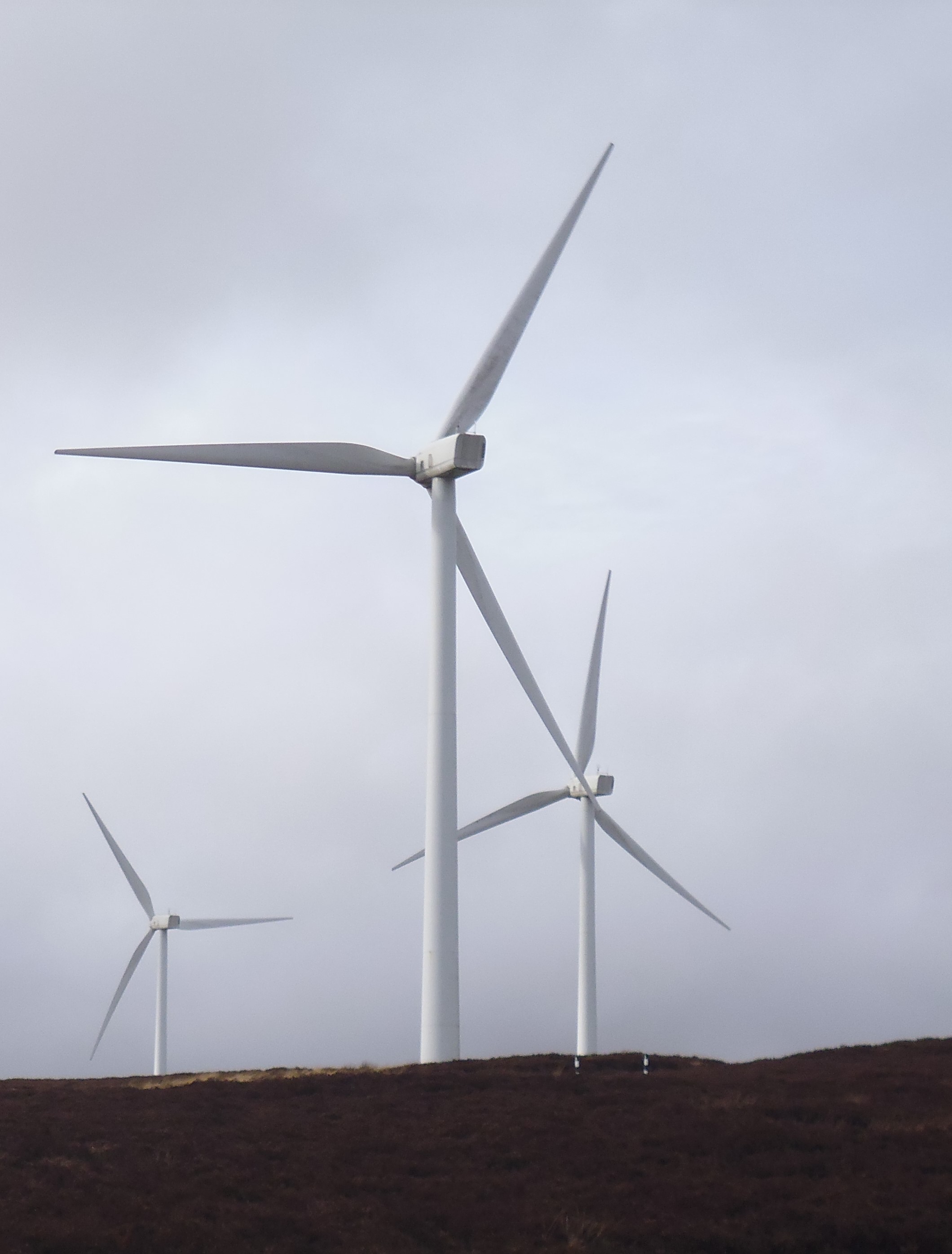 This would be a gigantic windfarm, one of Britain’s largest. There would be 65 turbines, each between 150 and 200 metres tall. By comparison Blackpool Tower is a mere 158 metres. It will make an immense visual impact, dominating the landscape for miles around.But this is a wild, open, even iconic, cultural landscape, the inspiration for poets and novelists over generations, most notably Emily Brontë. Her poetic descriptions of Pennine moors, windswept heather, crags, deep rocky gills and waterfalls above her home village of Haworth, inspired the name Brontë Country. The ruin of Top Withins farm, with its two iconic sycamores, is widely reputed to be the setting for Wuthering Heights. It could soon be framed by the outlines of immense, slowly moving turbines. Hardly surprisingly the Brontë Society have suggested that the development would have “a significant impact on local viewpoints and a world-renowned landscape”. This landscape has also inspired many other authors, painters and photographers including former Poet Laureate Ted Hughes, born in Calderdale.
Calderdale Council considers this landscape to be “internationally important in terms of its role in British culture and tourism”. It is an area beloved by walkers with such popular routes as the Pennine Way and the Brontë Way going through or close to it. Most of the area is open public access land. This in turn represents significant economic value in terms of tourism.
But, in a national climate emergency, can and should such considerations outweigh the need to switch the nation’s dependency from the hugely destructive burning of fossil fuels that now pose a threat to human existence?
In fact, the scientific evidence for climate benefits is nuanced. For one thing, much of the Walshaw Estate is a Site of Special Scientific Interest, important for wildlife, especially moorland birds. It includes areas of deep peat, a hugely important material for carbon storage. According to wind turbine expert Professor Jospeh Holden of Leeds University, the carbon benefits from the turbines would outweigh the loss from peat storage but only by a modest margin. This would not include other environmental disbenefits.
Prime among these are the impact on flood management. Already Calderdale is one of the most high-risk areas for river flooding in the UK. The huge concrete bases required for the turbines, deeply dug by heavy machinery into peat, soil and bedrock, and new roadways and access tracks required to bring the blades and towers, and to service turbines, plus miles of underground and surface cabling required, would massively increase the speed and quantity of water run-off, undoing the careful eco-management and leaky dams being constructed on valley slopes.
Yet these mega structures would only have a life at most of 25-30 years; but the damage o fragile ecosystems and peat layers that have taken centuries to grow would be permanent.
There is little doubt that if the proposal gets as far as a Public Inquiry, the evidence and public opposition will be overwhelming. It will almost certainly be turned down on both scientific and cultural grounds. But there is no certainty about this outcome.
And this could just be part of a well-known softening-up technique - an outrageous proposal to be followed by a” compromise deal” of say 30 turbines a mere 120 metres high, which might be what the developers might have in mind in the first place, and which politicians can then feel they can therefore endorse.
In practice there are ample low grade, degraded, and in some cases featureless post-industrial landscapes in Britain, sites dominated by industry, distribution warehouses, motorways and agro-prairies where large turbines, even in significant numbers, could actually become enhancing features. Because of their size and efficiency, it is no longer necessary to put turbines on hill tops where, as in the case of the Wadsworth Moor proposals, they could even be a threat to incoming aircraft heading for Manchester and Leeds-Bradford Airports. We need a positive strategic Regional Plan to determine sites where wind farms might be built, where there is no risk of destruction of sites of ecological or scientific importance, including peatland, or areas of cultural significance to be compromised.
But the battle to save the moorlands above Haworth could just be the first of many to come.
Colin Speakman